Publications
publications in reversed chronological order.
2026
-
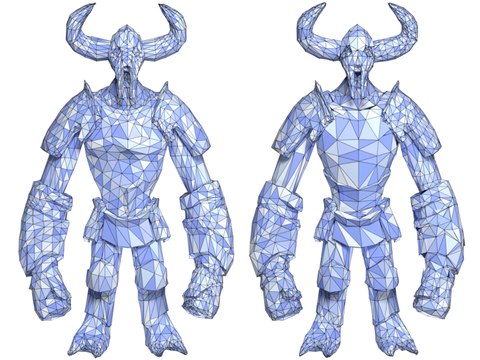
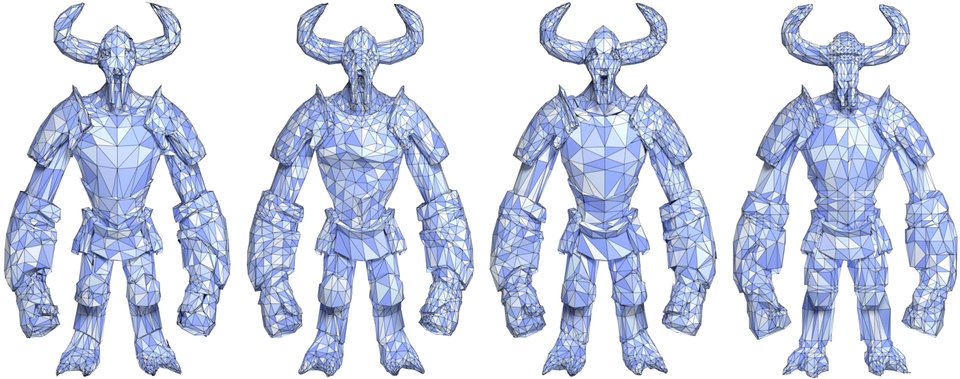
Scaling artist-designed meshes to high triangle numbers remains challenging for autoregressive generative models. Existing transformer-based methods suffer from long-sequence bottlenecks and limited quantization resolution, primarily due to the large number of tokens required and constrained quantization granularity. These issues prevent faithful reproduction of fine geometric details and structured density patterns. We introduce MeshMosaic, a novel local-to-global framework for artist mesh generation that scales to over 100K triangles—substantially surpassing prior methods, which typically handle only around 8K faces. MeshMosaic first segments shapes into patches, generating each patch autoregressively and leveraging shared boundary conditions to promote coherence, symmetry, and seamless connectivity between neighboring regions. This strategy enhances scalability to high-resolution meshes by quantizing patches individually, resulting in more symmetrical and organized mesh density and structure. Extensive experiments across multiple public datasets demonstrate that MeshMosaic significantly outperforms state-of-the-art methods in both geometric fidelity and user preference, supporting superior detail representation and practical mesh generation for real-world applications. Our project is available at: https://xrvitd.github.io/MeshMosaic/index.html.
-
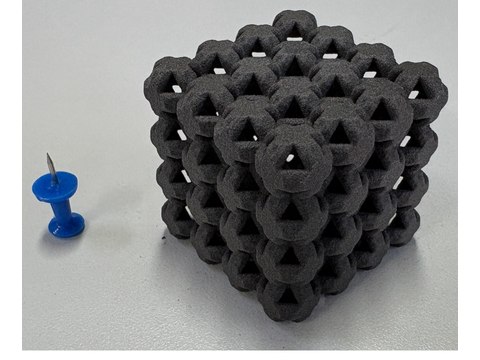
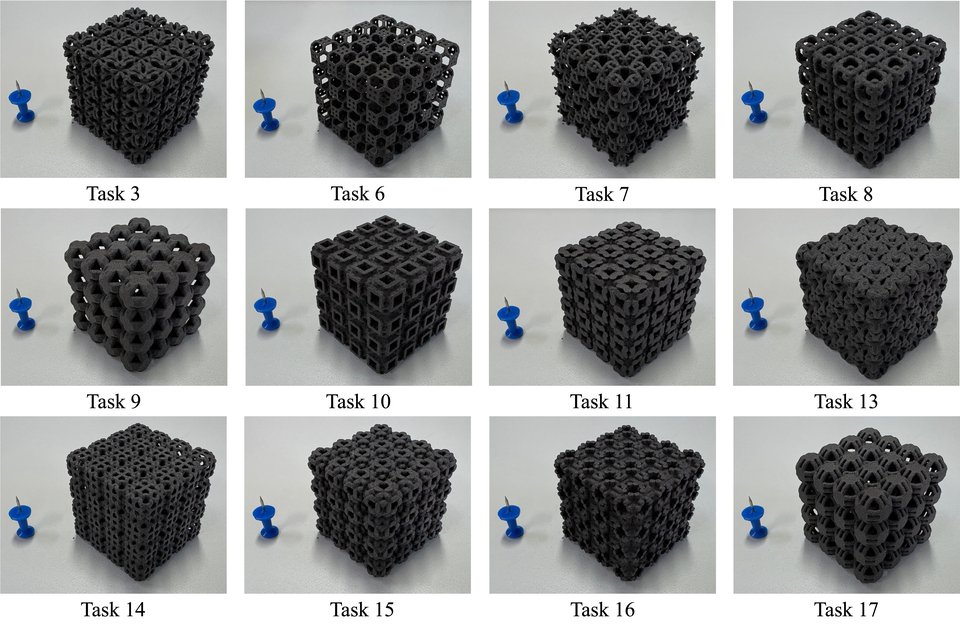
Designing microstructures with coupled cross-physics objectives is a fundamental challenge where traditional topology optimization is often computationally prohibitive and deep generative models frequently suffer from physical hallucinations. We introduce AutoMS, a multi-agent neuro-symbolic framework that reformulates inverse design as an LLM-driven evolutionary search. AutoMS leverages LLMs as semantic navigators to decompose complex requirements and coordinate agent workflows, while a novel Simulation-Aware Evolutionary Search (SAES) mechanism handles low-level numerical optimization via local gradient approximation and directed parameter updates. This architecture achieves a state-of-the-art 83.8% success rate on 17 diverse cross-physics tasks, significantly outperforming both traditional evolutionary algorithms and existing agentic baselines. By decoupling open-ended semantic orchestration from simulation-grounded numerical search, AutoMS provides a robust pathway for navigating complex physical landscapes that remain intractable for standard generative or purely linguistic approaches.
-
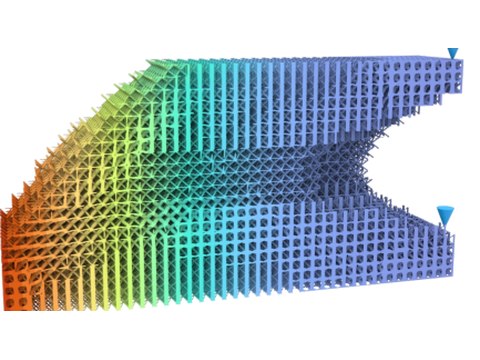
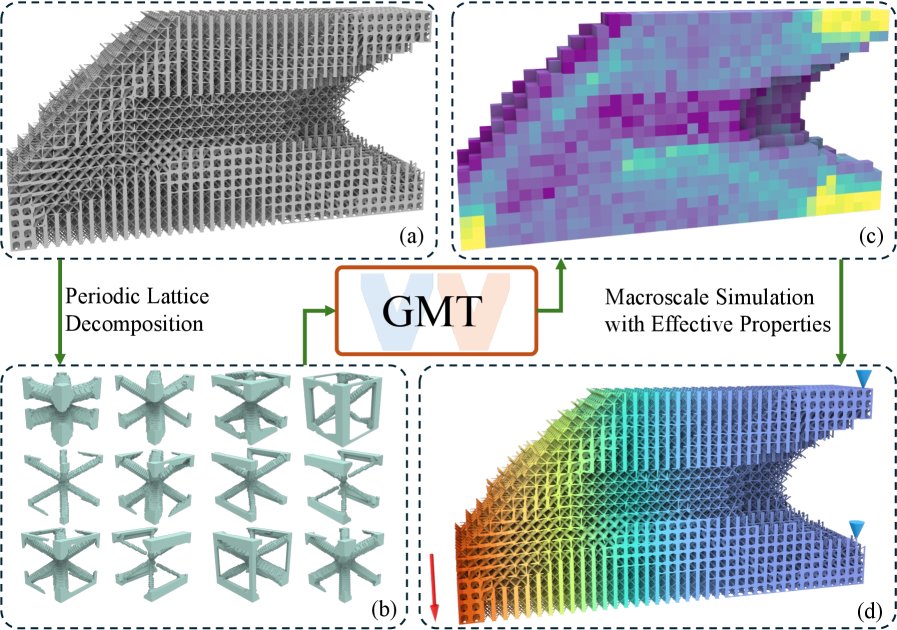
Lattice metamaterials enable lightweight, multifunctional structures, yet homogenization-based evaluation of their effective properties remains computationally expensive. Neural surrogates offer speed but often lack the accuracy and stability required for engineering-grade simulations. We introduce GMT, a Geometric Multigrid Transformer – a neural solver with high numerical fidelity for fast and reliable lattice homogenization. GMT achieves architectural alignment with Geometric Multigrid (GMG) by restructuring Point Transformer V3 to operate across sparse GMG hierarchies, capturing long-range dependencies and cross-level interactions essential for multigrid convergence. To enforce physical consistency, GMT incorporates physics-aware positional encoding for strict enforcement of periodicity and predicts both the finest-level solution and multi-level residual corrections. These predictions deliver a spectrally-aligned initialization, enabling end-to-end training under physics-informed and solver-aware losses and requiring only a single GMG V-cycle refinement to reach convergence. This fusion of neural prediction and numerical rigor achieves relative residual errors of 10^-5 with a 160times speedup over state-of-the-art GPU-based solvers at equivalent accuracy – particularly at high resolutions (e.g. 512^3), where traditional methods become most costly. We validate GMT across mechanical and thermal domains, demonstrate robust generalization to unseen geometries and non-periodic settings, and showcase scalability to high resolutions – enabling real-time design iteration, multi-scale simulations, high-throughput material discovery, and inverse design.


2025
-
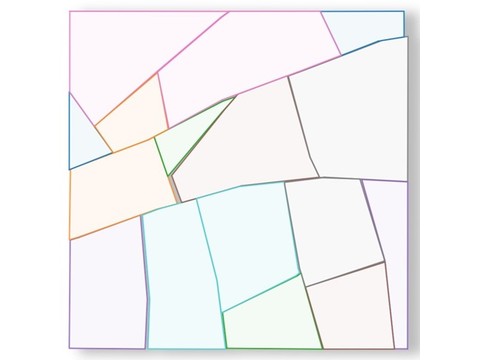

2D irregular packing is a classic combinatorial optimization problem with various applications, such as material utilization and texture atlas generation. This NP-hard problem requires efficient algorithms to optimize space utilization. Conventional numerical methods suffer from slow convergence and high computational cost. Existing learning-based methods, such as the score-based diffusion model, also have limitations, such as no rotation support, frequent collisions, and poor adaptability to arbitrary boundaries, and slow inferring. The difficulty of learning from teacher packing is to capture the complex geometric relationships among packing examples, which include the spatial (position, orientation) relationships of objects, their geometric features, and container boundary conditions. Representing these relationships in latent space is challenging. We propose GFPack++, an attention-based gradient field learning approach that addresses this challenge. It consists of two pivotal strategies: emphattention-based geometry encoding for effective feature encoding and emphattention-based relation encoding for learning complex relationships. We investigate the utilization distribution between the teacher and inference data and design a weighting function to prioritize tighter teacher data during training, enhancing learning effectiveness. Our diffusion model supports continuous rotation and outperforms existing methods on various datasets. We achieve higher space utilization over several widely used baselines, one-order faster than the previous diffusion-based method, and promising generalization for arbitrary boundaries. We plan to release our source code and datasets to support further research in this direction.
-
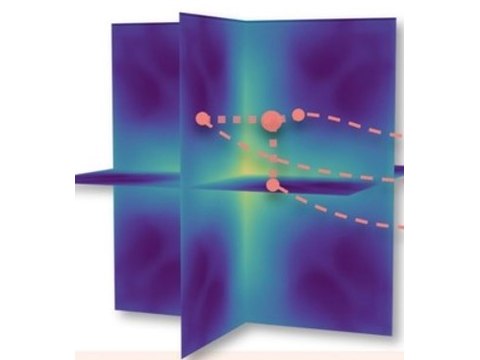
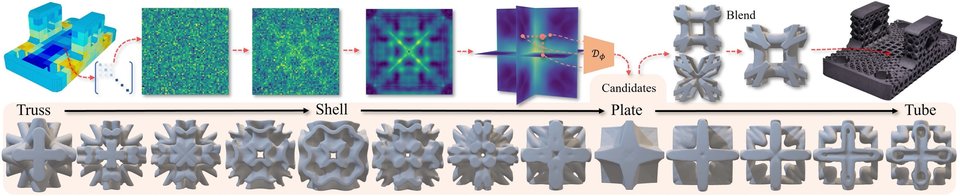
The inverse design of microstructures plays a pivotal role in optimizing metamaterials with specific, targeted physical properties. While traditional forward design methods are constrained by their inability to explore the vast combinatorial design space, inverse design offers a compelling alternative by directly generating structures that fulfill predefined performance criteria. However, achieving precise control over both geometry and material properties remains a significant challenge due to their intricate interdependence. Existing approaches, which typically rely on voxel or parametric representations, often limit design flexibility and structural diversity. In this work, we present a novel generative model that integrates latent diffusion with Holoplane, an advanced hybrid neural representation that simultaneously encodes both geometric and physical properties. This combination ensures superior alignment between geometry and properties. Our approach generalizes across multiple microstructure classes, enabling the generation of diverse, tileable microstructures with significantly improved property accuracy and enhanced control over geometric validity, surpassing the performance of existing methods. We introduce a multi-class dataset encompassing a variety of geometric morphologies, including truss, shell, tube, and plate structures, to train and validate our model. Experimental results demonstrate the model's ability to generate microstructures that meet target properties, maintain geometric validity, and integrate seamlessly into complex assemblies. Additionally, we explore the potential of our framework through the generation of new microstructures, cross-class interpolation, and the infilling of heterogeneous microstructures. The dataset and source code will be open-sourced upon publication.


2023
-
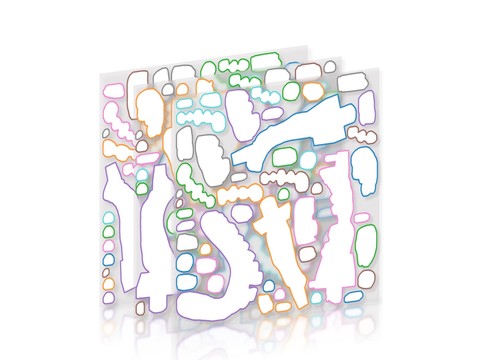
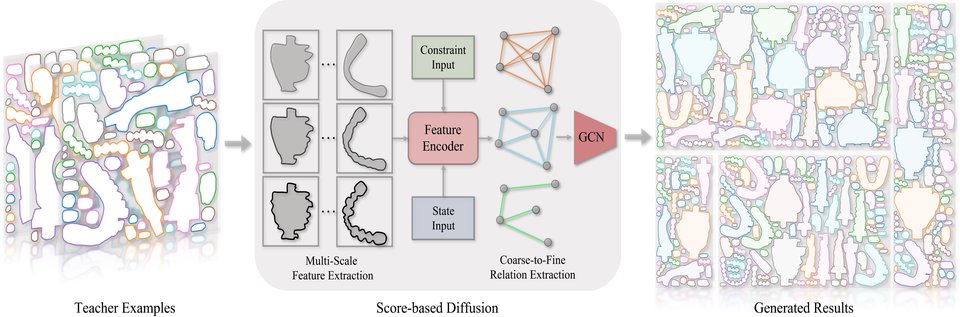
The packing problem, also known as cutting or nesting, has diverse applications in logistics, manufacturing, layout design, and atlas generation. It involves arranging irregularly shaped pieces to minimize waste while avoiding overlap. Recent advances in machine learning, particularly reinforcement learning, have shown promise in addressing the packing problem. In this work, we delve deeper into a novel machine learning-based approach that formulates the packing problem as conditional generative modeling. To tackle the challenges of irregular packing, including object validity constraints and collision avoidance, our method employs the score-based diffusion model to learn a series of gradient fields. These gradient fields encode the correlations between constraint satisfaction and the spatial relationships of polygons, learned from teacher examples. During the testing phase, packing solutions are generated using a coarse-to-fine refinement mechanism guided by the learned gradient fields. To enhance packing feasibility and optimality, we introduce two key architectural designs: multi-scale feature extraction and coarse-to-fine relation extraction. We conduct experiments on two typical industrial packing domains, considering translations only. Empirically, our approach demonstrates spatial utilization rates comparable to, or even surpassing, those achieved by the teacher algorithm responsible for training data generation. Additionally, it exhibits some level of generalization to shape variations. We are hopeful that this method could pave the way for new possibilities in solving the packing problem.

2022
-
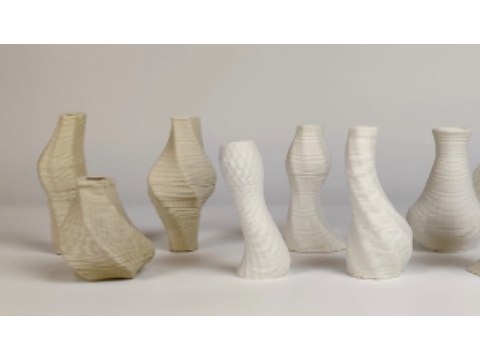
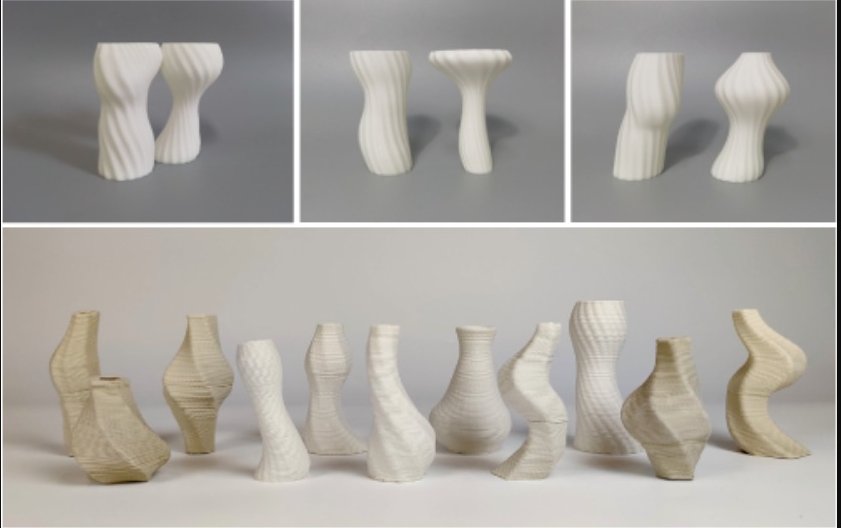
We present a method of designing and fabricating pottery artwork through human posture where the users need neither professional skills nor experience with 3D modeling software. This method creatively solves the problem of mapping between the human skeleton and the pottery shape and has a strong ability to model complex shapes while being user-friendly. Our system represents the deformation of a pottery object with four independent operators and provides real-time visual feedback as the user changes their posture. Unlike traditional pottery throwing, where the product has high symmetry, our system supports modeling asymmetric pottery shapes. After obtaining the model, the model can be fabricated directly via ceramic 3D printing, as the models satisfy printability constraints. A user study showed that the designed mapping relationship supports pottery shape deformation with a high degree-of-freedom, and inexperienced users can easily use the system with minimal instruction.
